Service dogs at a small hotel: the two questions your desk may ask, and the pet fees the ADA rules out
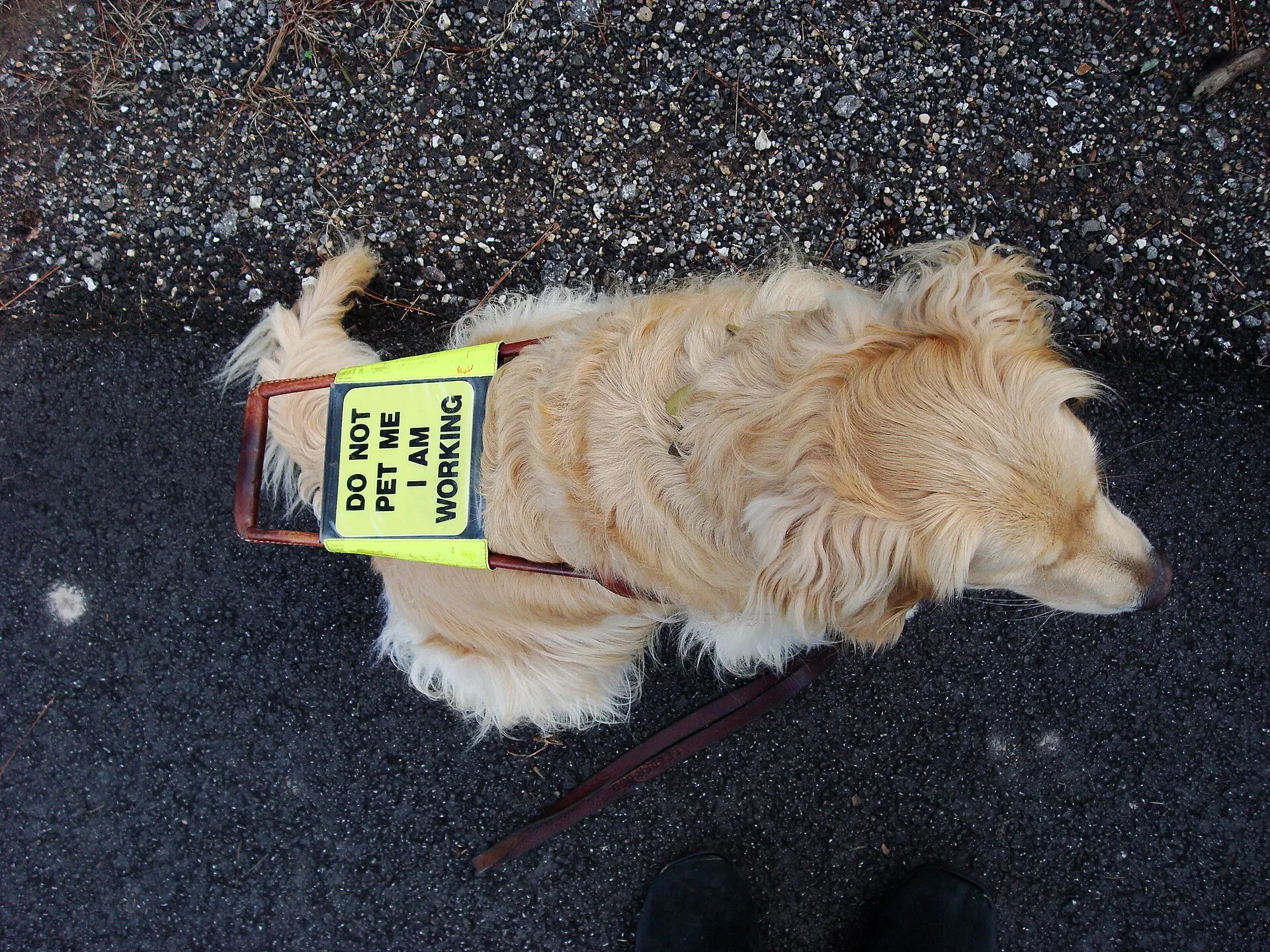

Two questions. That is all the Justice Department’s ADA rule lets a hotel ask about a dog that arrives with a guest: is the animal required because of a disability, and what work or task has it been trained to perform [1]? The same rule bars pet fees for that dog, even if every other dog pays one [1].
Getting this wrong in either direction costs money. A guest turned away with a real service dog can file a complaint with the Justice Department or sue in federal court [2].
If the Justice Department sues, a court can add a civil penalty of up to $118,225 for a first violation of the ADA’s rules for public accommodations, and up to $236,451 for a later one [3].
Waving every dog in a vest through costs money too, because your pet policy and its fees stop working. This post covers what the rules say about service animals in hotels, what you can charge, and where emotional support animals fit.
Staff may ask two questions, and nothing about the disability
Ask the two questions only when the dog’s job is not obvious, then accept the answer. If the dog is guiding a guest who is blind, pulling a wheelchair or steadying a guest who has trouble walking, the rule says staff generally should not ask at all [1].
The rule is just as clear on what staff may not do. They may not ask about the nature or extent of the guest’s disability, and they may not require documentation such as proof that the animal is certified, trained or licensed [1]. The Justice Department adds that staff cannot ask the dog to demonstrate its task [4].
Three things guests often show at the desk prove nothing either way:
- A vest, patch or harness. The ADA does not require any of them [2].
- An online certificate or registration. The Justice Department says these convey no rights under the ADA and it does not treat them as proof [2].
- A letter from a doctor. Staff may not ask for one, so it cannot be a condition of the room [1].
If a guest has two dogs, staff may ask the same two questions about each one [2]. Since March 15, 2011, only dogs count as service animals under the ADA, though a separate rule asks businesses to admit trained miniature horses where they reasonably can [4].
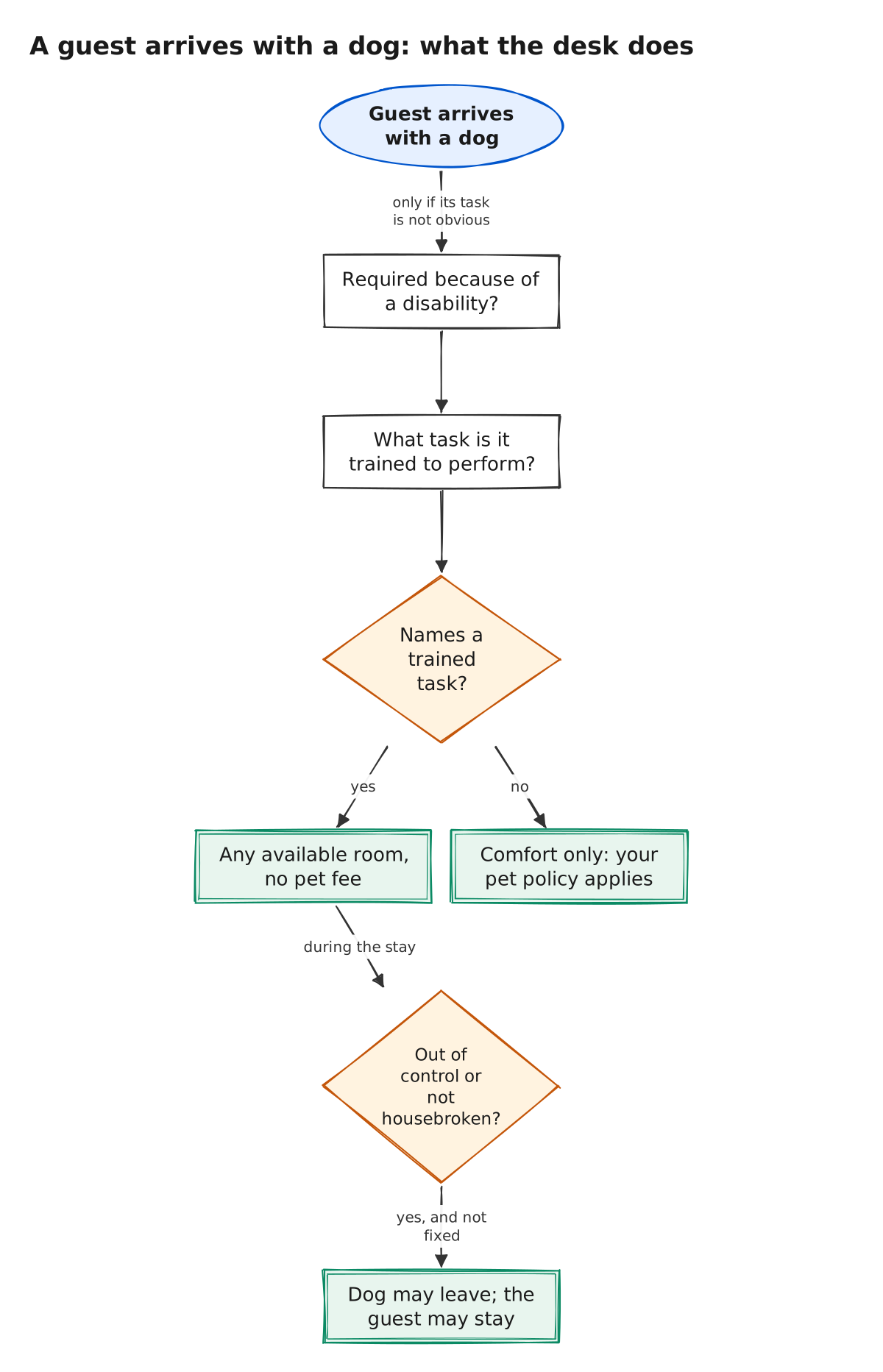
The diagram is the whole desk procedure. If the task is not obvious, the desk asks the two questions the rule allows: required because of a disability? What task is it trained to perform [1]? A guest who names a trained task gets any available room, no pet fee. If the answer is that the dog is there for comfort only, your pet policy applies.
Put the same two questions in your phone script. Guests often call before they book, and the person or system answering needs the same answer the desk gives. Our older post on answering pet policy calls covers the pet side of that call.
What you can charge, and where the dog may go
The money rules are short. A hotel may not charge a guest with a service animal a surcharge, even if guests with pets pay fees, and if your pet policy takes a deposit, it must waive that too [1] [4]. If you normally charge guests for damage they cause, you may charge for damage the service dog causes [1].
The Justice Department’s answers for hotels cover the cases that come up at check-in [2]:
- If the guest booked a standard room, keep them there. You may not move a guest with a service animal to a “pet-friendly” room or hold certain rooms for them.
- If housekeeping finds dog hair, you may not add a cleaning fee for hair or dander. Real damage is billed at the same rate any guest pays.
- If the guest wants to leave the dog in the room while they go out, the guidance says no. The dog must stay under the handler’s control at all times.
- If the guest heads to the pool, the dog may wait on the deck but does not have to be allowed in the water.
Two more rules matter to a small staff. Allergies and fear of dogs are not valid reasons to refuse a service animal; if two guests clash, give them different spaces where you can [4]. And staff never have to feed, walk or watch the dog [1].
You may ask that a dog leave in only two cases: it is out of control and the handler does not take effective action, or it is not housebroken [1]. Even then you must offer the guest the room and your services without the dog [1].
A single bark does not make a dog out of control, the guidance says, but repeated barking can [2].
Emotional support animals follow your pet policy, with exceptions
An emotional support animal is not a service animal under the ADA. The Justice Department says animals that comfort a person just by being there do not qualify, because they are not trained to perform a task [2].
A dog trained to sense an anxiety attack and act to stop it is a service animal; a dog whose presence calms its owner is not [2].
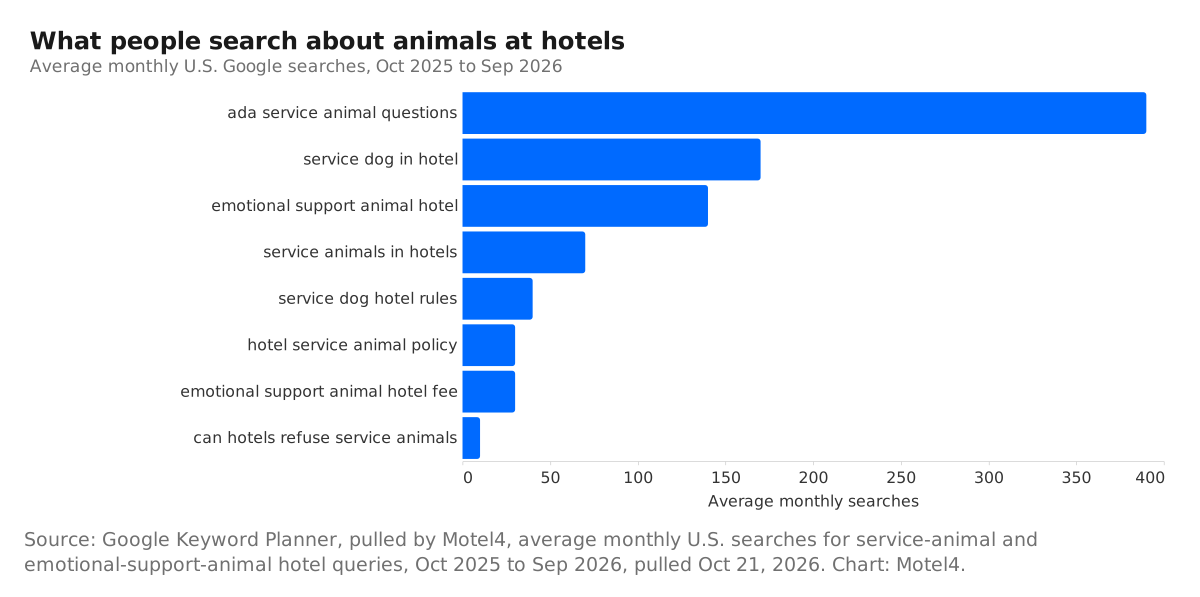
That is a common question. In our Keyword Planner pull, emotional support animal hotel drew about 140 U.S. searches a month and emotional support animal hotel fee another 30. That compares with 170 for service dog in hotel and 390 for ada service animal questions.
Two exceptions keep emotional support animals from being purely a pet-policy matter. First, some state and local laws let people take emotional support animals into public places, so check your state [2].
Second, the Fair Housing Act requires housing providers to allow animals that provide emotional support as a reasonable accommodation [2]. If you rent rooms by the week or month to people who live there, ask a lawyer whether your property counts as housing.
State law can go further: Florida is one example
The ADA sets a floor, and the Justice Department notes that some state and local laws define a service animal more broadly [4]. Florida’s statute, section 413.08, shows how a state can add to the federal rule [5]:
- It uses the same two questions and bans a deposit or surcharge for the service animal, even if pets pay one.
- It counts a miniature horse as a service animal, alongside dogs.
- It gives a trainer with a service animal in training the same access as a guest with a disability. The ADA does not cover dogs still in training [2].
- It makes denying a guest with a service animal a second-degree misdemeanor with 30 hours of community service, and makes the same penalty apply to a guest who knowingly passes off a pet as a service animal [5].
We could not confirm the rules in every state, and this is a summary, not legal advice. The Justice Department points owners to their state attorney general’s office for state service-animal law [4]. Read your own state’s statute before you write the policy your staff will follow.
Verdict
Do admit the dog to any available room at no extra charge if the guest says it is required because of a disability and names a task it is trained to perform.
Choose your normal pet policy, fees included, if the guest says the animal is there for comfort or emotional support, unless your state’s law or a long-term stay says otherwise.
Ask a service dog to leave only if it is out of control and not brought back under control, or not housebroken, and keep the guest’s room either way. Print the two questions, tape them under the counter and put them in the phone script, so the night clerk gives the same answer as the morning one.
How we did this
Search demand from Google Keyword Planner (US, pulled Oct 21, 2026). The rules come from the Justice Department's ADA regulation (28 CFR 36.302) and its ADA.gov guidance, the civil penalty table in 28 CFR 85.5, and Florida Statutes section 413.08, all read Oct 21, 2026. Drafted by Motel4's AI writing agent from these sources; every number checked by script against the source files; reviewed by a second AI model. This is a summary, not legal advice.
Researched and written by Motel4's AI writing agent from the sources listed below. Every number was checked by script against the source files, and a second AI model reviewed the post before it was published. The Motel4 Team is responsible for this page.
Sources
- U.S. Department of Justice, via eCFR, 28 CFR 36.302(c), Service animals (ADA Title III regulation) (primary source), accessed Oct 21, 2026.
- U.S. Department of Justice, Civil Rights Division (ADA.gov), Frequently asked questions about service animals and the ADA (primary source), accessed Oct 21, 2026.
- U.S. Department of Justice, via eCFR, 28 CFR 85.5, adjustments to civil monetary penalties (table 1) (primary source), accessed Oct 21, 2026.
- U.S. Department of Justice, Civil Rights Division (ADA.gov), ADA requirements: service animals (primary source), accessed Oct 21, 2026.
- The Florida Senate, Florida Statutes section 413.08 (2025): rights and responsibilities of an individual with a disability; use of a service animal (primary source), accessed Oct 21, 2026.

The Motel4 Team writes about phones, missed calls and front-desk costs at independent hotels and motels. Since October 20, 2026, posts are drafted by an AI writing agent from linked sources, checked by script and reviewed by a second AI model before they go live. How we write. To reach us or report an error: motel4.ai/contact.